
Your team is waiting for direction. You’ve got targets to hit, budgets to finalise, and stakeholders expecting your plan. The temptation is to dive straight into spreadsheets and KPIs. But here’s the question that separates good leaders from transformative ones: will you hand them metrics, or will you give them meaning?
Purpose-led leadership sets the emotional and cultural tone for the year ahead, and it drives lasting engagement at every level. When leaders anchor their work in authentic values and clear purpose, they create the conditions for meaningful impact that extends far beyond the balance sheet.**
The Foundation: Understanding Intentional Leadership
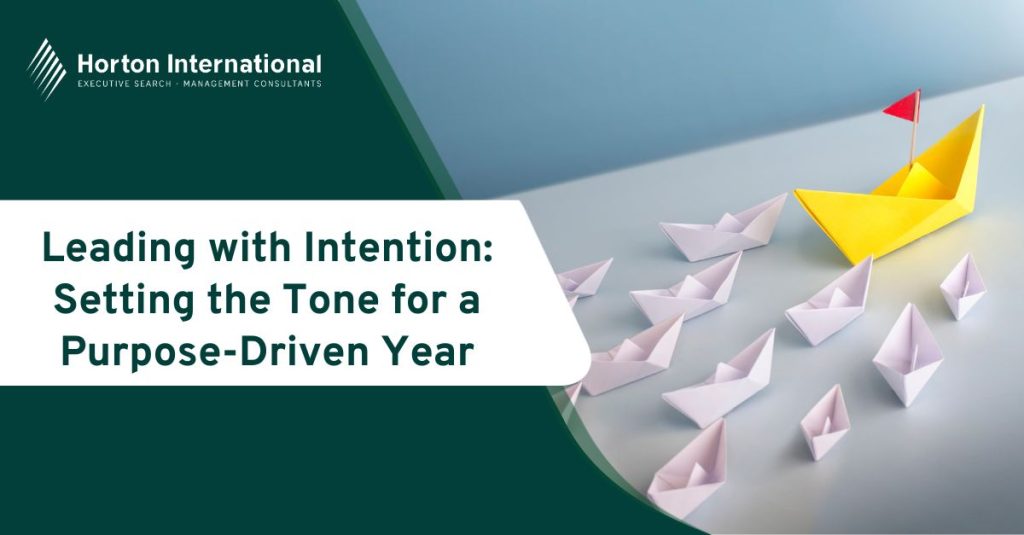
Intentional leadership might seem straightforward: someone with a clear purpose who builds the capacity to bring it to fruition. But true intentional leadership runs deeper. In its purest form, it becomes almost invisible because the leader’s vision is carried out not only by them, but by a host of people they have effectively and purposefully led.
These leadership values are intensely personal and inward-facing. They manifest in the smaller, seemingly mundane actions: a deliberate pause that creates space for others to contribute, a question asked to deepen understanding, or the sustained motivation to remain connected to the bigger picture.[1]
Three Pillars of Intentional Leadership
Experimentation: To create disruption where it’s needed, leaders must be willing to experiment. This encompasses agility, flexibility, and innovation. Intentional leaders become comfortable challenging themselves. As a manager, you might recognise that you talk too much, preventing others from sharing ideas. So you make a conscious effort to allow silences without filling the gaps. Whatever the outcome, you’ve tried something different.
Growth Mindset: To be intentional, you must be willing to learn, unlearn, and re-learn. By actively seeking opportunities to improve yourself, you become better equipped to help others do the same. Put time in with new clients. Block out time for research. These small investments allow you to confidently share information with your team.
Purpose: This sits at the very epicentre of being intentional. Without purpose-driven leadership how can you expect to feel motivated to strive? Start with your own ‘why’. Once you’ve identified this, consider what changes needs to occur. Then remain committed, persistent, and determined to those changes.[2]
Taking Action: What Purpose-Led Leaders Do Differently
Research with award-winning leaders reveals three key behaviours that bridge the gap between leadership intent and organisational culture:
Mobilise People Around a 360° Stakeholder Approach
- Build a community of advocates by identifying individuals who can activate people around your organisation’s purpose
- Empower them by using leadership influence to eradicate barriers whilst enabling them to serve the wider business ecosystem
- Create partnerships to enact positive societal change, recognising that the best solutions come from collaboration
- Strengthen your ability to develop relationships, essential to amplifying purpose-led impact[3]
Close the Gap Between Intention and Action: Focus relentlessly inspiring teams by taking a human-centred approach. Get tactical about purpose, recognising that change requires the full force of your people. Step away from traditional leadership thinking. Where necessary, show humility, admitting that you don’t have all the answers but can find individuals who can help.
Unleash Sustained Purpose-Led Transformation: Create a ‘no permission culture needed’ by breaking down barriers. Identify systems that don’t serve the organisation, then implement changes that empower people. Aim to set the industry standard rather than match current practice. Champion a psychological contract of supporting wellbeing and providing meaningful work. Research shows that 70% of employees say their sense of purpose is closely tied to their work.[4] Today’s candidates want to know about an organisation’s purpose and whether its values correlate with their own.
Purpose by Intention – a Tool for Corporations
One in three Fortune 500 companies uses a corporate purpose statement – a way to build their brand around their customers. It’s an approach that helps weave intention in the the DNA of a company – and it gives employees a value touchstone to reach out to during their working day. Here are some powerful examples:
- Wells Fargo: Help people go further with their money.
- Motorola Solutions: Help businesses run better and people live better, because we’re all at our best when we feel safe.
- Cognizant: Engineering modern business to improve everyday lives.
- Merck: Use the power of leading-edge science to save and improve lives around the world.
- Stanley Black & Decker: Dedicated to making great tools – and making a better world.
Does your business have a purpose statement? Is it used throughout the company to drive decision making internally as well as comms externally? A review of the role of your purpose statement can be a great place to move your organisation towards purposeful business.
Navigating Common Obstacles
Leading with purpose sounds inspiring in theory, but the reality often includes sceptical board members, resistant cultures, relentless pressure for quarterly results and time constraints. But experiences suggests that organisations that skip the intentional foundation often find themselves a couple of years later having hit targets but lost talent; achieved metrics but damaged culture and performance.
Start small. Even 30 minutes of focused reflection each week compounds over time. When facing scepticism, lead by example rather than declaration. When culture resists, find your early adopters and build momentum. Leadership authenticity isn’t about perfection; it’s about consistently aligning actions with values.
Your Leadership Reflection Framework
Here’s a practical toolkit to embed intentional leadership into your routine:
Weekly Reflection (15 minutes):
- What leadership value did I model this week?
- Where did my actions diverge from my intent?
- What one experiment should I try next week?
Monthly Purpose Audit (30 minutes):
- How are we progressing towards our purpose?
- What barriers prevent purposeful work?
- Which relationships need strengthening?
Quarterly Vision Reset (90 minutes):
- Does our vision still inspire?
- Are our people empowered to act with purpose?
- What structural changes would unleash greater impact?
This framework transforms abstract concepts into manageable actions, building the executive mindset required for sustained transformation.
Setting the Tone for the Year Ahead
Rather than rushing into targets and metrics, use the beginning of this year to define your leadership intent.
The leaders who answer these questions thoughtfully will create organisations where purpose-led transformation thrives. They’ll build cultures of trust where people feel empowered to act. Their emotional intelligence will allow them to navigate complexity with compassion. And they’ll inspire teams to pursue something greater than quarterly results.[5]
Sources
[1] https://commonpurpose.org/resources/blog/what-is-intentional-leadership/
[2] https://www.forbes.com/sites/brentgleeson/2024/11/05/5-strategies-for-becoming-a-purpose-driven-leader/
[3] https://www.ey.com/content/dam/ey-unified-site/ey-com/en-uk/insights/workforce/documents/ey-how-to-attain-purpose-led-transformation2.pdf
[4] https://www.ey.com/content/dam/ey-unified-site/ey-com/en-uk/insights/workforce/documents/ey-how-to-attain-purpose-led-transformation2.pdf/
[5] https://commonpurpose.org/resources/blog/what-is-intentional-leadership