
Beyond Accessibility: What True Inclusion Really Means
Disability inclusion is a subject close to my heart, given that my daughter relies on a wheelchair to get around. Every day, we’ll encounter an obstacle, man-made or natural, to her participating fully in what others take for granted.
In the disability context, inclusion means being fully considered and included in the design or planning of something. It’s not about adapting or ‘making allowances for’ someone after the fact. It’s the difference between a flat entrance and a temporary ramp in a doorway. Accessible does not necessarily mean inclusive. It’s about making someone feel that they have the same right to be there as the rest of the team, rather than being a ‘special’ exception.
Companies are waking up to the benefits that employees with disabilities can bring to an organisation. Perhaps most obviously, neurodiversity within a company can add real value through different ways of thinking. But living with a disability invariably develops an individual’s resilience, determination and creativity, as they face uncommon personal challenges on a daily basis.
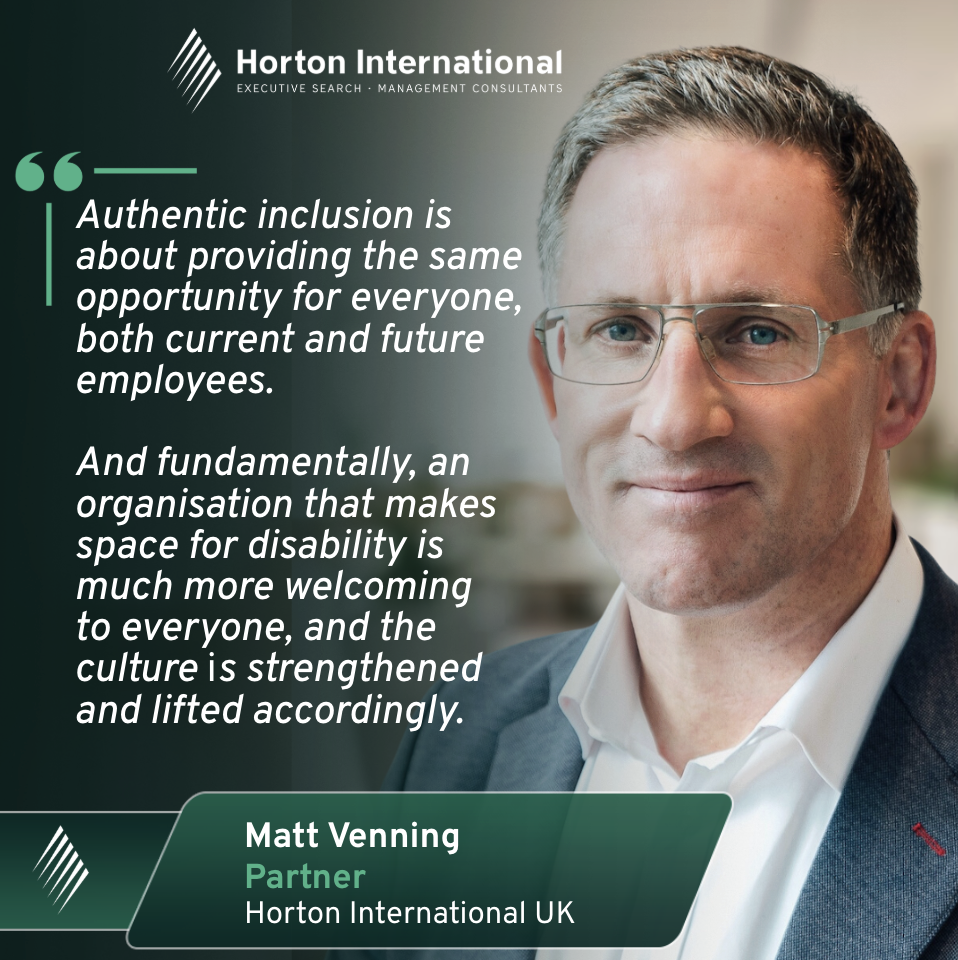
Authentic inclusion is about providing the same opportunity for everyone, both current and future employees.
And fundamentally, an organisation that makes space for disability is much more welcoming to everyone, and the culture is strengthened and lifted accordingly.